

A great cheeseboard begins long before guests arrive. It begins with proper care and handling of the cheese itself. Whether you’re planning a gathering or prepping leftovers, thoughtful storage and packing preserves flavour, texture and quality. Here’s a quick guide to make every wedge look its best and last longer.
Before the Cheeseboard
Did you know, cheese is alive and needs to breathe? When you buy artisan cheese from a cheesemonger, they will care for this daily, and package cheese for you in special cheese paper, quite like waxed baking paper or parchment paper. This is perfect for storing your cheese in and allows moisture to escape while protecting the cheese from drying out. When wrapping cheese at home, avoid using cling film as it can trap condensation and encourage surface moisture that will speed up unwanted mould growth. If you buy cheese that has been wrapped in cling film, it is worth rewrapping it in baking paper when you get home, and/or storing in a plastic container in your vegetable crisper drawer in the fridge.
Check each cheese to ensure you know its name and milk type, both for your own serving ease and to share with guests. Make sure to take cheese out of the fridge at room temperature for at least 30 minutes before serving; this unlocks fuller aromas and richer flavours.
Designing your Cheeseboard
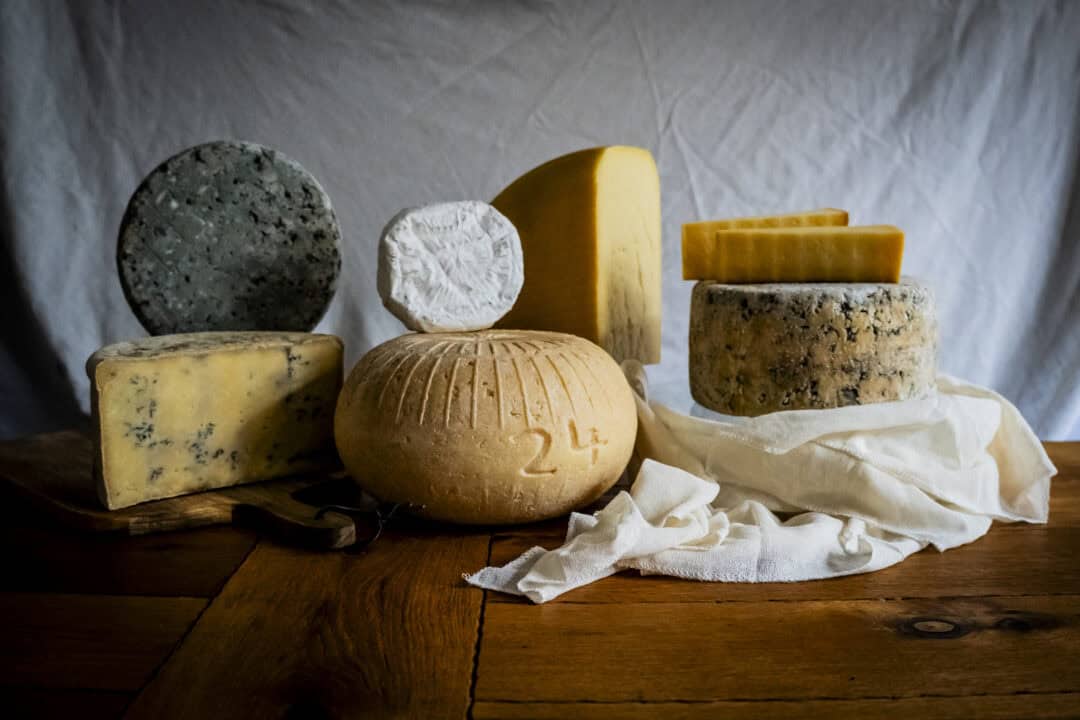
When arranging, think of visual balance and variety. Group cheeses from ‘mild to wild’, placing softer, runnier cheeses on a plate or bowl, with a knife or serving tool for each cheese to avoid cross-contamination. Fill gaps with accompaniments that complement the flavours of your cheese (think fresh or dried fruit, nuts, pickles, crackers) but let the cheese remain the star! If you’re setting up your cheeseboard well in advance of when it will be eaten, make sure to keep crackers separate so they don’t lose their crunch.
After the Cheeseboard: Storing Leftovers
Leftover cheese? I barely know her. But if you do find yourself with leftover scraps of cheese, don’t throw it away! Re-wrap it as soon as possible in fresh cheese paper or wax paper, then place in a plastic container in the fridge. Hard and semi-hard cheeses should keep well for a week or more; soft cheeses are best eaten within a few days.
For crumbly or washed-rind styles, gently press a small piece of parchment against exposed surfaces before wrapping. If condensation forms, unwrap and change paper to avoid off aromas. Gradually bring leftovers back to room temperature before eating to enjoy the best texture and flavour.
Did you know you can freeze cheese? If you find yourself with leftover hard cheeses like St Andrews cheddar or alpine styles like Rainton Tomme, simply grate it up and place in a freezer bag for longer term storage. You can even use it from frozen for cooking.
If you find yourself with too many ‘odds and ends’ of cheese to get through, look up the recipe for French dish Fromage fort: a spread made with leftover cheese mixed with white wine, garlic and herbs.
With a little care, your artisanal Scottish cheeses will stay delicious beyond the initial event, and ready to be enjoyed again and again.